Reference
Storage, stability & handling.
A verified lot degrades exactly as fast as a poor one if it is stored badly. This is general laboratory reference material on peptide stability.
Why lyophilization matters
Peptides are supplied freeze-dried because water enables the degradation pathways that destroy them: hydrolysis of the peptide backbone, deamidation at asparagine and glutamine residues, and oxidation at methionine, cysteine and tryptophan. Removing water under vacuum arrests all three. A properly lyophilized peptide with low residual moisture, stored cold and dark, is stable on a timescale of years rather than days.
The four enemies
| Factor | What it does | Practical control |
|---|---|---|
| Moisture | The dominant factor — drives hydrolysis and deamidation. | Let a vial reach room temperature before opening; cold glass condenses atmospheric water straight onto the cake. Keep desiccant in storage. |
| Temperature | Degradation rate roughly doubles per 10 °C increase. | Ambient is fine for days in transit; long-term storage belongs at -20 °C or below. |
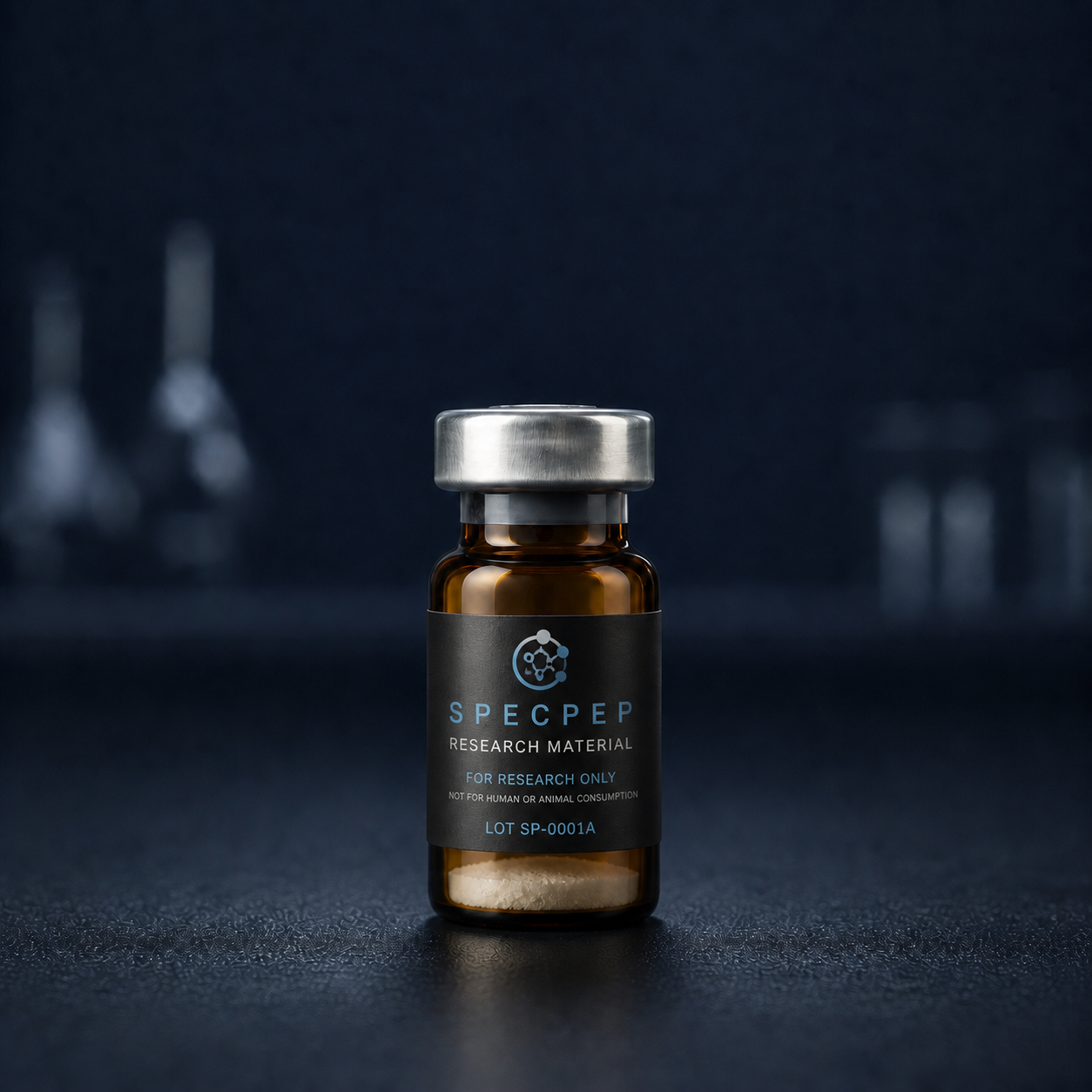
| Light | Tryptophan, tyrosine, phenylalanine and cysteine residues are photosensitive. | Amber vials or opaque secondary packaging are not decoration. |
| Freeze-thaw cycling | Local concentration and pH shifts at the ice interface. | Aliquot once, then take one aliquot at a time rather than repeatedly thawing a stock. |
Storage by compound class
| Class | Lyophilized | In solution | Notes |
|---|---|---|---|
| Standard peptides | -20 °C, dark, desiccated | 2–8 °C, short term | Aliquot rather than freeze-thaw |
| Long-term archive | -80 °C | -80 °C in aliquots | Preferred for reference standards |
| Cys-containing peptides | -20 °C, dark, desiccated | 2–8 °C, degassed buffer | Disulfide scrambling and oxidation risk |
| Met / Trp-containing | -20 °C, dark | 2–8 °C, dark | Oxidation-sensitive; avoid oxidising buffers |
| Copper complexes (GHK-Cu) | -20 °C, dark | 2–8 °C, dark | Chelators in buffer will strip the copper |
| Acylated analogs | -20 °C, dark | 2–8 °C | Prone to aggregation at high concentration |
| Small molecules | Room temp, desiccated | Per solvent | Generally more robust than peptides |
These are general laboratory reference conditions. Always follow the storage statement printed on the specific product label and COA, which takes precedence.
Receiving a shipment
- Inspect the outer packaging and every vial seal before anything else.
- Confirm the material, size and lot number against the packing list and COA.
- Move temperature-sensitive formats to refrigeration immediately; lyophilized vials can be transferred to -20 °C the same day.
- File the COA against the lot number. If you ever need to explain an anomalous result, that document is the first thing you will want.
- Report any damage, discrepancy or non-conformance within seven days — see refunds & returns.
Signs a lot may have degraded
- A cake that has collapsed, melted, discoloured or shifted from a uniform appearance.
- Visible moisture inside the vial, or a cake that has become sticky or oily.
- Material that will not go fully into solution when it previously did.
- Cloudiness, precipitate or colour change in a solution that was previously clear.
If you see any of these, stop and contact us with the lot number. We would far rather replace a questionable vial than have it produce a result you then have to explain.